
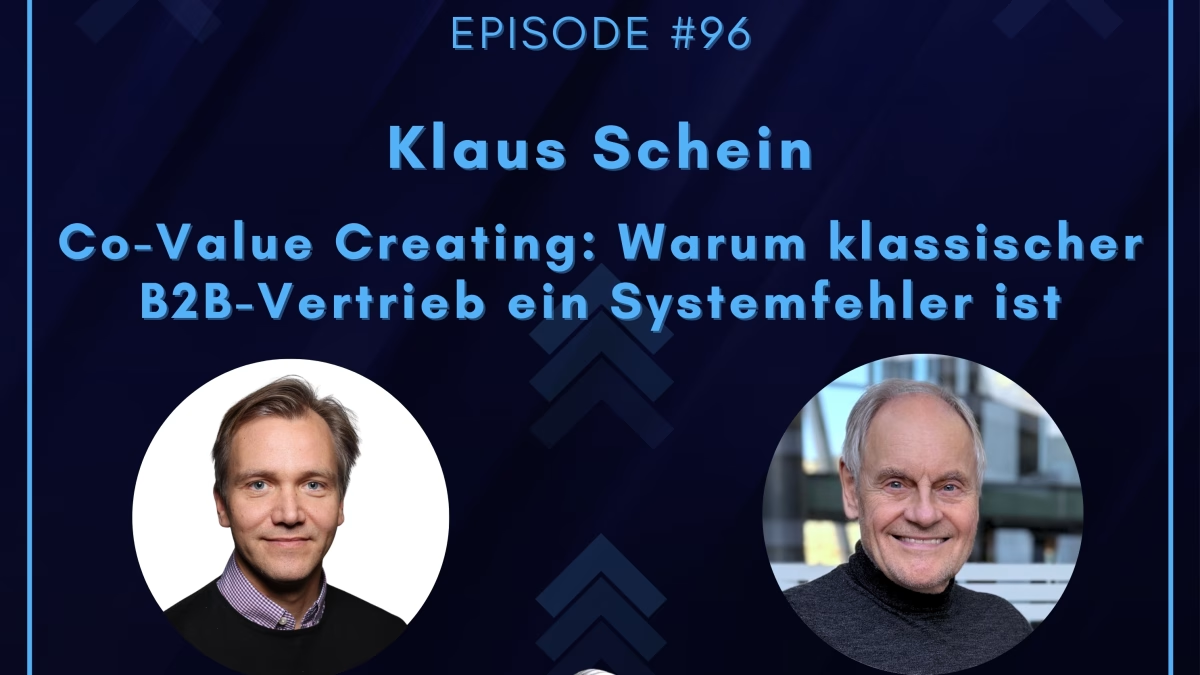
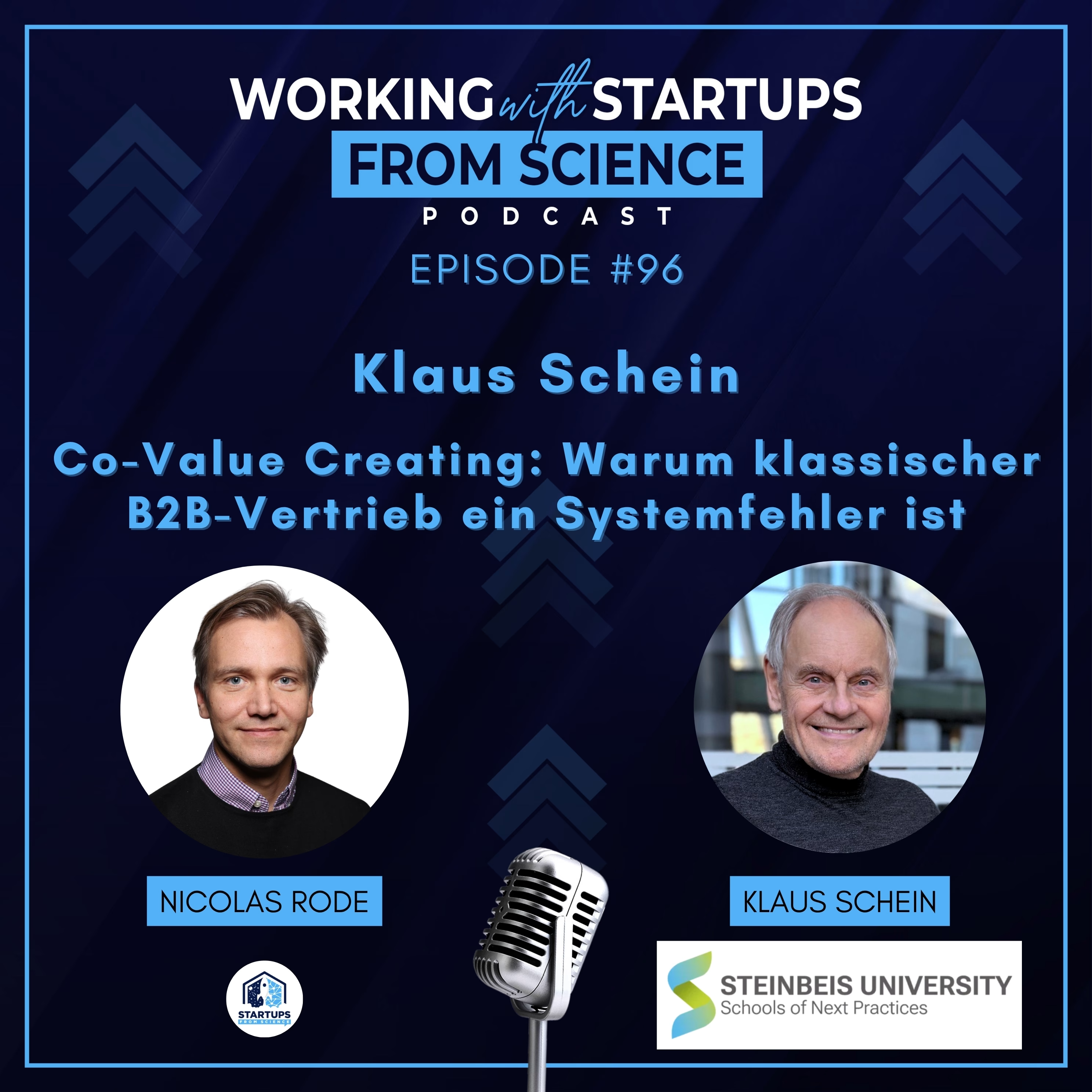
Episode 96 From Silos to Synergy: Unlocking Sustainable Growth Through Co-Creation with Klaus Schein

Share this
In Episode 96 of the Working with Startups from Science podcast, we sit down with Klaus Schein, Program Director for Co-creation at the Steinbeis University Schools of Next Practices. Drawing on decades of experience bridging the gap between cutting-edge technology and market needs, Klaus Schein offers a profound critique of traditional sales models and presents a compelling roadmap for collaborative innovation.
The Silicon Valley Spirit Meets Traditional Engineering
Schein’s journey began with a childhood fascination for electronics, which naturally led to a degree in electrical engineering and a role in high-frequency technology development at Rohde & Schwarz in Munich. Seeking broader horizons and personal development, he soon pivoted to sales at Hewlett-Packard (HP).
At HP—often regarded as the original Silicon Valley startup—Schein encountered a transformative organizational culture. Characterized by open doors, management by walking around, and a distinct lack of hierarchical ego, HP fostered an environment of absolute trust. He later experienced a similar ethos at General Electric during the Jack Welch era, where leaders viewed themselves as a “broom in curling”—clearing the path of obstacles so their employees could succeed. It was here he learned the importance of having a “Chief Fun Officer” mentality to keep teams motivated and resilient.
“As a boss, I am your broom in curling. I don’t curl the stone myself; I clear the path so you can hit the mark.”
The Innovation Trap in Traditional Procurement
Reflecting on his extensive experience as a Key Account Manager and strategic consultant, Schein identifies a fatal flaw in modern corporate procurement. Traditional B2B sales involve a high-stakes, adversarial dynamic. Suppliers often invest heavily—up to €50,000—just to participate in a pitch, fully exposing their intellectual property and innovative concepts.
Frequently, corporate buyers leverage these insights to negotiate lower prices from cheaper, less innovative competitors. This “always cheaper” mentality starves suppliers of the margins needed to fund future R&D (typically 10-20% of revenue). Consequently, suppliers begin to hold back, offering only minimum viable solutions rather than fully optimized innovations. The result is a lose-lose scenario where overall market innovation stagnates.
The Paradigm Shift: Co-Value-Creation
To escape this trap, Schein advocates moving away from purely transactional buyer-seller relationships toward Co-Creation. This involves treating a customer almost like a joint-venture partner. By openly sharing strategic goals and resources, companies can develop solutions collaboratively.
The VICI Framework for Innovation
Schein structures this process through his proprietary VICI framework:
- Vision: Start with an inspiring, measurable goal that aims to “win-more,” not just split the existing pie.
- Intention: Secure genuine commitment from all stakeholders (from the CEO down). If intention is lacking, employ the “Go for the no” strategy and walk away early to save resources.
- Co-Creation: Develop solutions iteratively as a unified, cross-departmental team (integrating R&D, sales, procurement, and leadership).
- Innovation: Ensure the solution doesn’t remain a proprietary one-off. It must scale into an industry standard (a process he refers to as RISE).
Rethinking Sustainability: The IPPP Model
When discussing sustainability and corporate responsibility, Schein challenges the conventional “Profit, People, Planet” prioritization. He introduces the IPPP Model: Invest in People and Planet to multiple Profits.
Schein argues that true profitability is a lagging indicator. By first investing deeply in employee empowerment and committing to sustainable, resource-efficient practices, companies organically eliminate waste and drive innovation. Profit becomes the natural, sustainable outcome of doing right by your people and your environment.
Navigating Crisis with a Startup Mindset
In an era defined by supply chain disruptions, economic shifts, and constant crisis, large organizations often paralyze themselves with rigid, multi-year plans that become obsolete before they are executed. Schein’s advice for established enterprises is to adopt a startup mentality.
- Start Small, Start Tomorrow: Don’t wait for perfect conditions. Begin experimenting immediately.
- Redefine Failure: In the realm of innovation, an unproven idea is not a “mistake”; it is an essential learning step.
- Prove the Concept: Find one strategic customer willing to co-create, run a two-day workshop, and validate the model before rolling it out company-wide.
3 Key Learnings
At the conclusion of the interview, Schein shared three pieces of advice he would give his younger self:
- Enjoy the process of learning.
- Question everything written in books.
- Always dare to think anew.
For a comprehensive guide on implementing these strategies, contact Klaus Schein on LinkedIn: https://www.linkedin.com/in/klaus-schein/
His workshops feature practical canvases, leadership insights, and real-world case studies from industry leaders.
